Ilm-fan
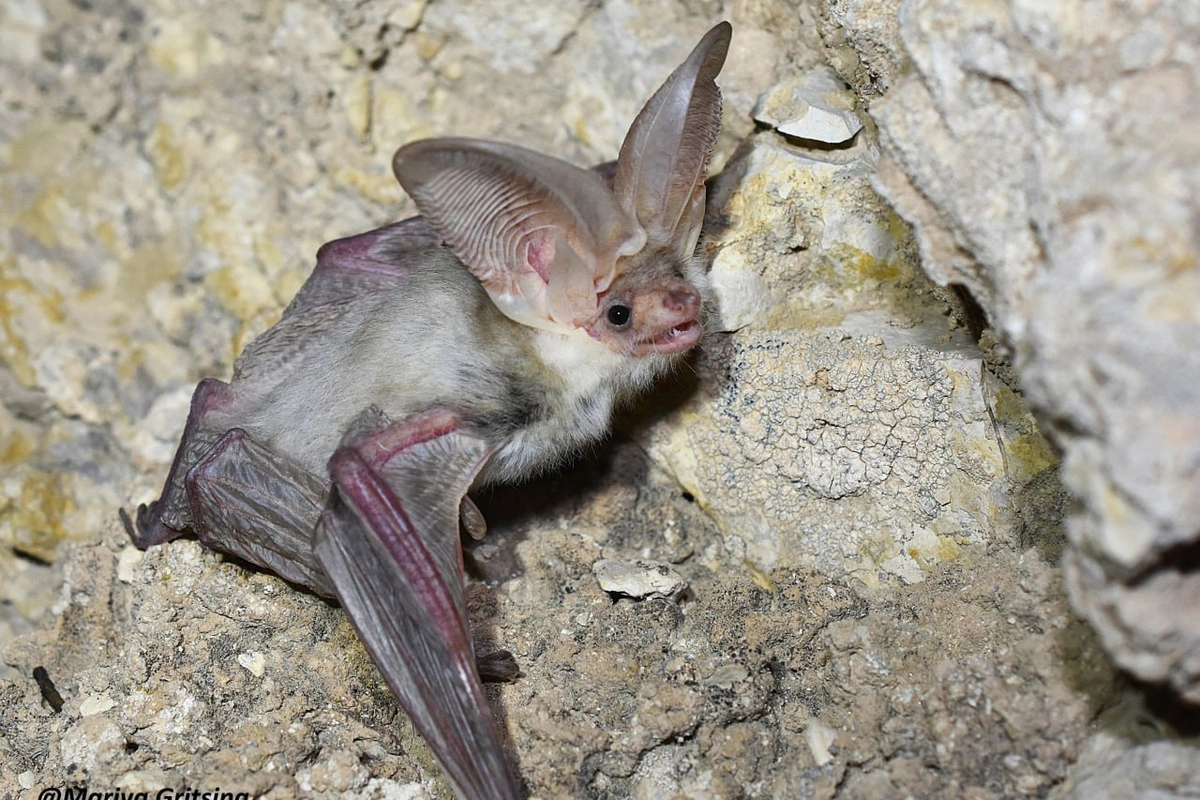
A bat rarely seen in the wild for 55 years has been discovered in Uzbekistan
An extremely rare species of bat that has hardly been seen in the wild for 55 years has been recorded for the first time in Uzbekistan. This significant finding has sparked great interest among the scientific community and environmentalists. Experts note that such discoveries play a vital role in studying the country's biodiversity and ecological balance.
The unique discovery was made within the boundaries of the "South Ustyurt" National Nature Park. This protected area is known for its distinctive landscape and rich fauna. During a scientific expedition organized in the park, researchers managed to record this elusive animal, marking a major milestone for local zoology.
The identified species, the Turkmen long-eared bat, is distributed across the Central Asian region. This species is considered extremely rare and poorly studied. According to scientific records, the bat has practically not been encountered in the wild over the past 55 years, being known mostly through historical records and museum specimens.
The expedition was organized with the participation of scientists from the Institute of Zoology of the Academy of Sciences of Uzbekistan and international researchers. Collaborative efforts between local and foreign experts have successfully enriched the scientific data regarding the region's fauna.
Experts clarify that the Turkmen long-eared bat - Plecotus turkmenicus had not been previously recorded in the country. This does not mean the discovery of a species entirely new to science, but rather the first practical confirmation that this already known species also inhabits Uzbekistan.
Prior to this finding, the bat was primarily known through records and museum specimens dating back to before 1970. For decades, researchers struggled to find living specimens in the wild, leaving the status of the species shrouded in mystery.
The scientific expedition was organized as part of the "One Health" in Nature Conservation project implemented by the International Union for Conservation of Nature (IUCN). Such international initiatives contribute significantly to the preservation of fragile ecosystems.
It is worth noting that the project is funded by the International Climate Initiative (IKI) of the German Federal Ministry for the Environment. Such financial support enables extensive field research and helps uncover new insights into Central Asia's natural heritage.
Ulashish